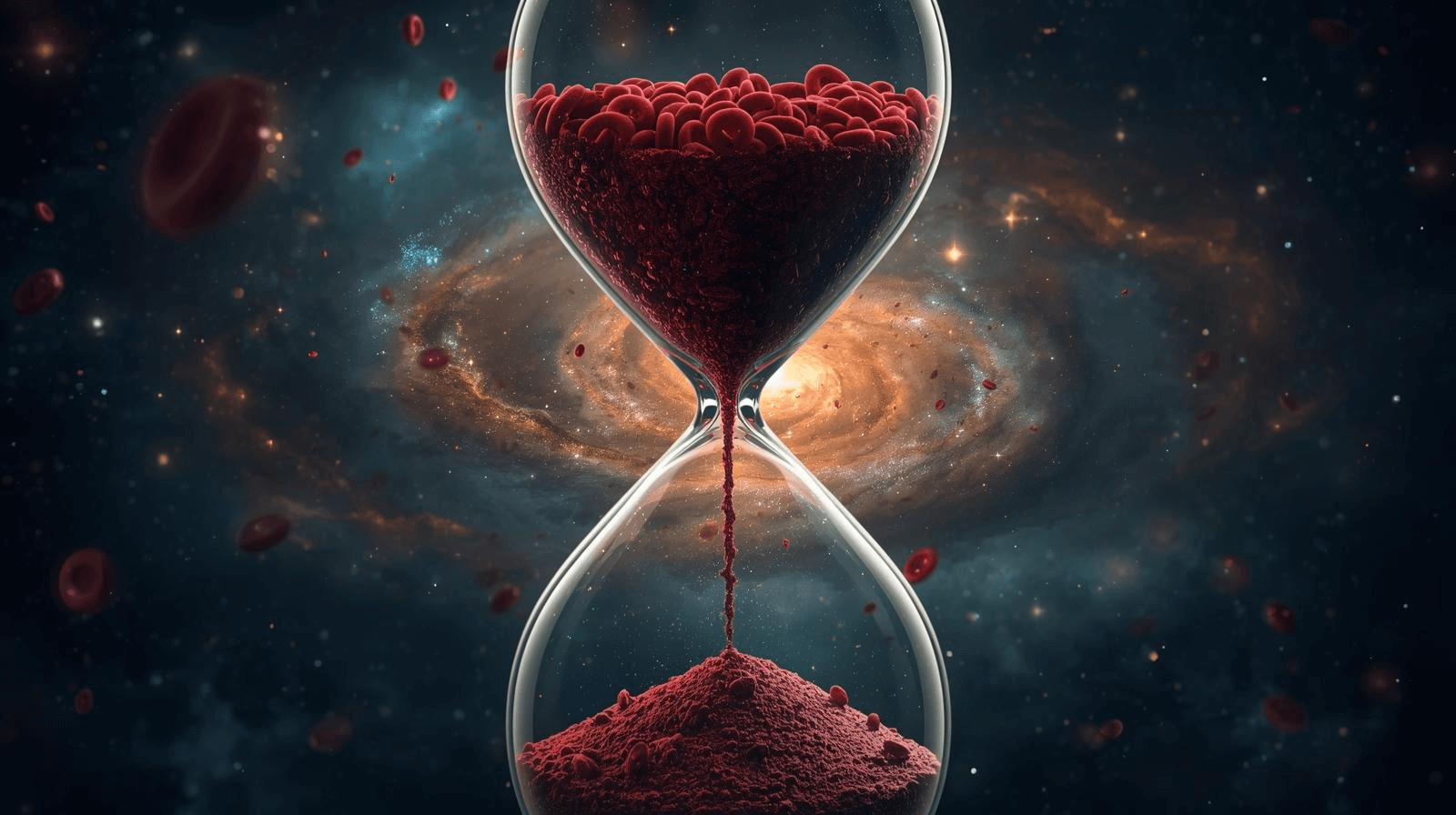
Space Can Make Your Cells Age Faster!
Imagine you’re an astronaut coming back to Earth after weeks of exploring space. You feel amazing after such an incredible adventure.
But deep inside your body, something surprising is happening: your cells (the tiny building blocks that make up everything inside you) are stressed!
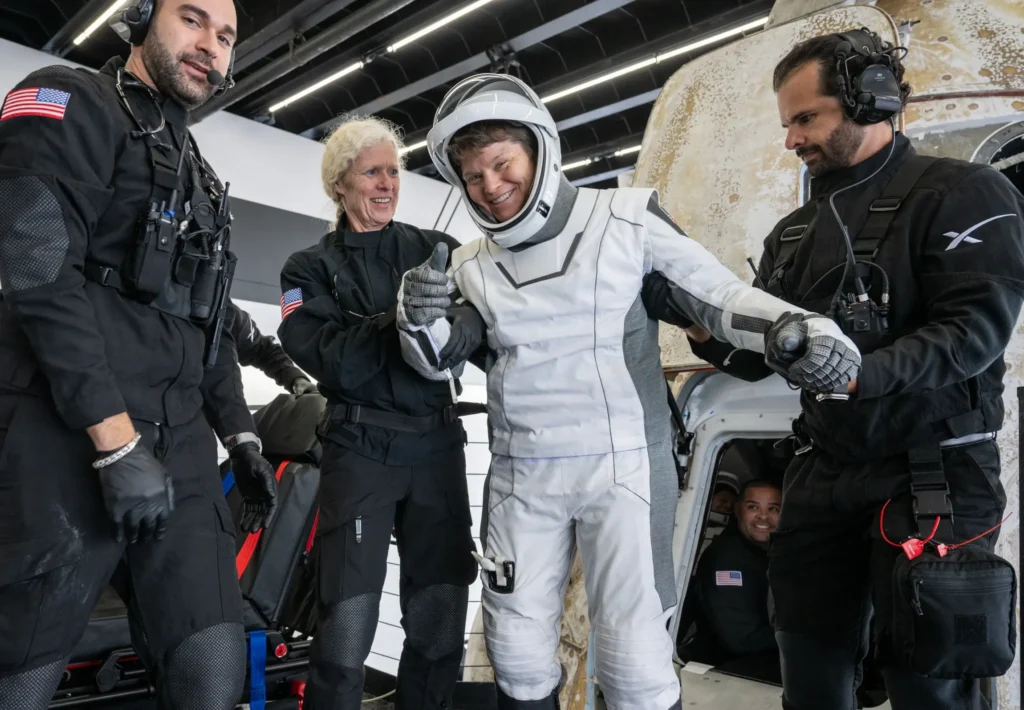
NASA astronaut Anne McClain is helped out of the SpaceX Dragon Endurance spacecraft. NASA Headquarters / NASA/Keegan Barber, Public domain, via Wikimedia Commons
A new study shows that a special kind of cell that makes our blood actually ages faster during space travel.
How can space make time seem to speed up inside our bodies? Let’s find out.
Meet Your Mighty Blood-Making Cells
Did you know your bones aren’t solid all the way through? Inside is a soft, spongy area called bone marrow.
Hidden in that marrow lives a very special kind of cell.
These powerful cells can make every other type of blood cell, so scientists call them hematopoietic stem and progenitor cells—or HSPCs for short (much easier to say!).
HSPCs create:
- Red blood cells, which carry oxygen from your lungs around your body.
- White blood cells, which fight germs so you don’t get sick.
- Platelets, which help your blood clot when you get a cut.
Pretty important, right? But as we get older, these cells age too, and they don’t work as well, a reason our bodies heal more slowly.
Blood Cells on a Space Trip!
Scientists in California wondered what would happen to these powerhouse cells in space.
They collected HSPCs and split them into two groups:
- One group stayed safely on Earth.
- The other blasted off into space!
With high-tech lab gear on board, the team could study the travelling cells while they were still up there, long before they returned to Earth.
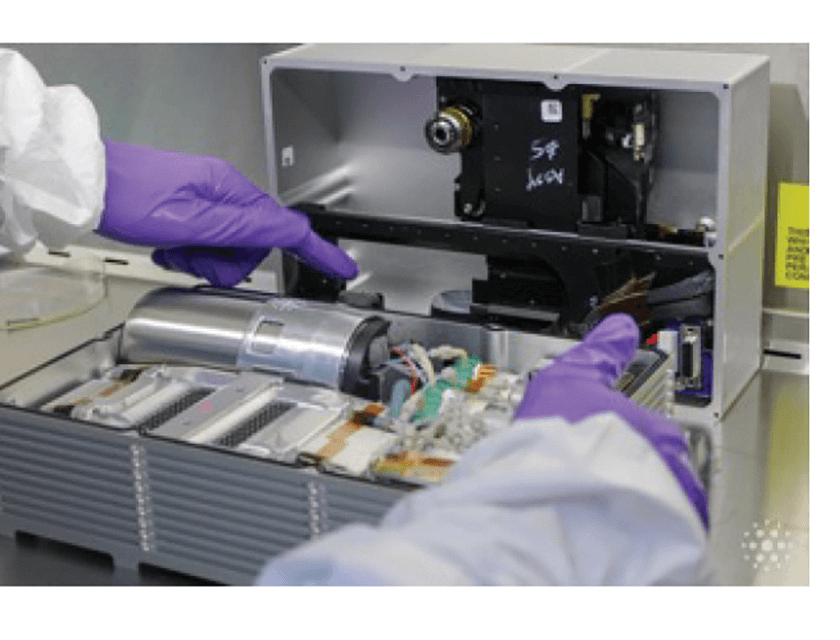
The astronauts used high tech lab equipment to study the cells . Pham J, Isquith J, Balaian L, et al. Nanobioreactor Detection of Space-Associated Hematopoietic Stem and Progenitor Cell Aging. Cell Stem Cell. 2025;32(9):1403-1420.e8. doi:10.1016/j.stem.2025.07.01
Space Speeds Up Ageing
The space-travelling cells looked older and more worn out than their Earth buddies.
It’s as if space travel sped up time for those cells!
Interestingly, the cells from some people didn’t age as much as others. Maybe those people have a special built-in protection, like a real-life superpower, that scientists still need to figure out.

Why This Matters-In Space and on Earth
How amazing would it be to spend months exploring deep space or even build a home on Mars or the Moon?
These aren’t just sci-fi dreams; scientists are seriously planning for it.
They’ve already worked out how to make “moon bricks” with bacteria and how to water plants when there’s no gravity (check out our other Trailblazing Science blogs to learn more!).
But there’s a big challenge: our bodies aren’t built for space.
We’re used to Earth’s gravity and protected from harmful space radiation.
This new study shows that long trips away from Earth can actually damage our cells.
And it’s not just about astronauts. Learning how space travel speeds up cell ageing could help doctors find new ways to keep people healthier and living longer here on Earth.
What’s Next for Space Science?
This research answered some questions, but opened up many more.
- Why were some people’s cells less damaged?
- Do they have a hidden “superpower”?
- Could we invent medicines or shields to protect astronauts’ cells?
And remember, discoveries made for space often help us here on Earth.
(For example, did you know some surgical robots were first designed for space missions? Check out our blog on that!)
Space travel is definitely exciting. It pushes the limits of what we think is possible and explores new boundaries.
However, maybe it pushes our bodies to their limits too. Can we ever make space travel really safe for humans? No one knows yet- but lots of experts are working to try to.
And perhaps on the way, they will discover lots about our bodies that can help us all down here on Earth, too.
Tonights Dinner Table Discussion

Here’s some ideas to spark a fascinating discussion.
- Why do you think astronauts’ bodies change when they float in space?
- How could learning about space help doctors make people on Earth healthier?
- If you were in space for a year, how would you stay healthy without gravity?
- Would you want to go to space if you had to stay in zero gravity for a long time? Why or why not?
Big Family Question:
Imagine you could make one part of your body work better in space — what would you choose and why?
Science is awesome. So is asking questions.
Want to tell a solid discovery from a splashy headline?
Use our easy 4-step “Is It Real or Rubbish?” checklist.
It’s quick, printable, and free—grab yours below.
Never miss a discovery.
Loved learning how a trip to space can speed up ageing in human blood stem cells?
Sign up for our newsletter to keep exploring the science behind space travel, human health, and other out-of-this-world ideas.
Keep Exploring
Want to keep blasting off into amazing science?
Check out more fun Trailblazing Science stories to see how space adventures and cool inventions help us learn about our bodies and our planet.
Let’s Talk Space!
Would you like to be an astronaut after learning how space can make our blood cells age faster?
What do you think scientists should try next to keep astronauts healthy?
Ask a question or tell us what you’d do if you were in charge of the next space mission!