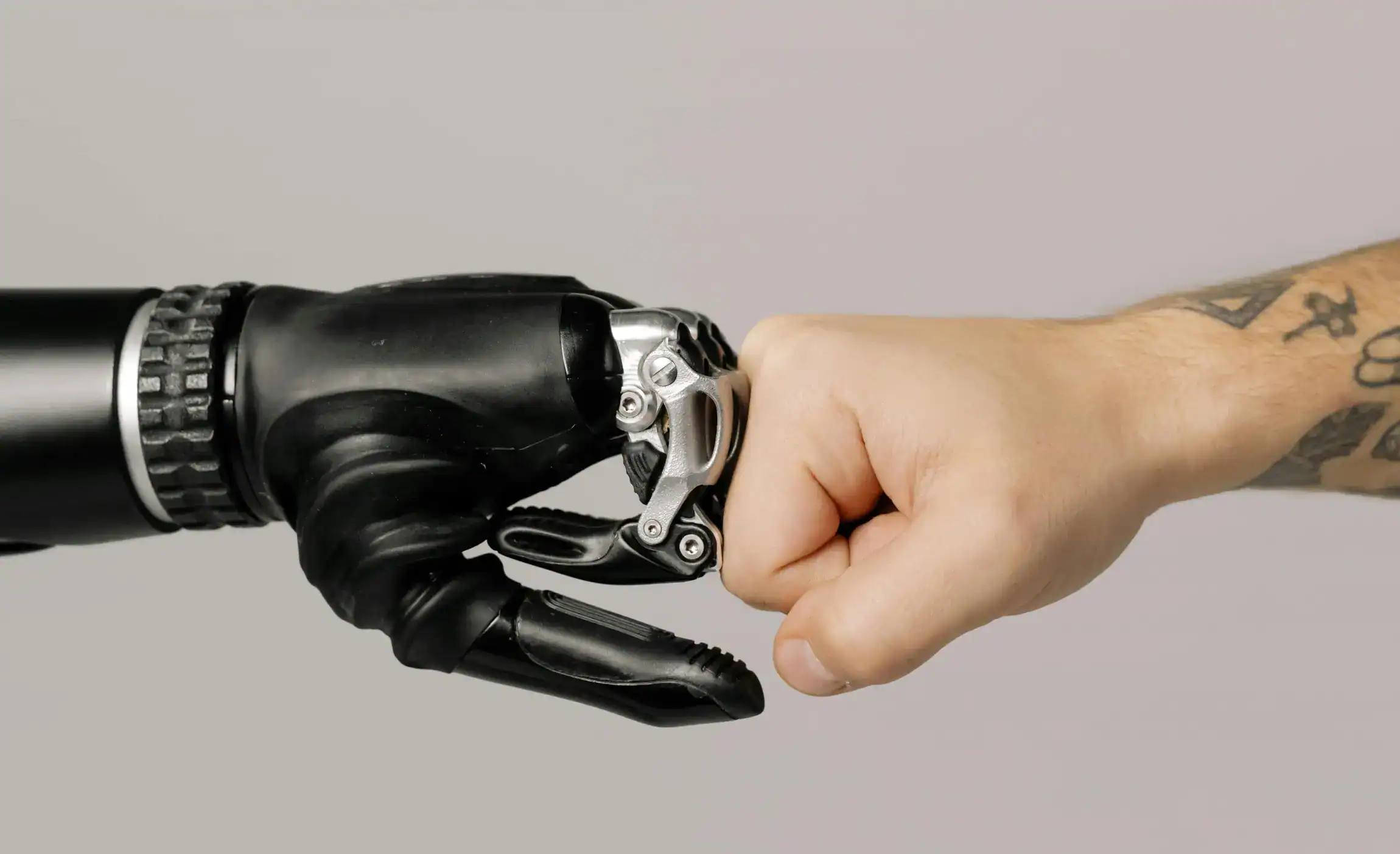
A human and a robot fist-bump. Symbolising the combined forces of humankind and cutting-edge technology.
|

Remote Robotic Surgery: Treating Stomach Cancer from afar.

Photo by cottonbro studio:

Toggle Switch
Select Reading Level

Did you know that stomach cancer affects over one million people around the world every year?

What Is Cancer?


Cancer is a disease where some of the cells (the building blocks that make everything in your body) start to grow in a way they shouldn’t. Normally, your cells grow, do their job, and die when they’re supposed to. But in cancer, some cells keep growing and making new cells. They don’t die when they should. These extra cells can form a lump or mass called a “tumor.” Not all tumors are cancer, but some can spread to other parts of the body, making you sick. Cancer can start almost anywhere in the body. Stomach cancer is cancer that starts in the stomach. Doctors work hard to find ways to stop cancer from spreading around the body and help people feel better.

The problem is worse for people who live far away from hospitals, like in small villages or poorer places. These people might not get the right treatment soon enough, which could make it harder for them to get better.

Imagine being sick and needing surgery, but the hospital is simply too far away.

But what if there was a way for top doctors to perform life-saving surgeries from anywhere, without even being in the same room?

It might sound like science fiction, but it’s already happening thanks to robotic surgery and super-fast internet.

To learn more about what stomach cancer is watch the video below:

What Is Remote Robotic Surgery?

Remote robotic surgery is when doctors use special robots to perform surgeries, but the incredible part is that the surgeon doesn’t even need to be in the same room! Instead, the surgeon can control the robot from far away.

Here’s how it works:

  • The surgeon sits at a special computer called a console.
  • This console has hand controls, foot pedals, and screens that show a super-detailed 3D view of the patient.
  • When the surgeon moves their hands or fingers, those movements are sent through a super-fast internet connection all the way to the robot in the operating room.

It’s like the surgeon is right there in the room, even if they’re actually hundreds or thousands of miles away!

To learn more about how this incredible tech was developed and where it shall take us in the future, check out this blog next!

A Real-Life Example

This isn’t just an idea any more. Doctors are actually using this new tech to help patients today!

Here’s a story of how doctors used this to help two people with stomach cancer.

  • One patient was 70 kilometers away from the surgeons.
    (If you were to drive on the freeway between the surgeon and the patient, it would take just over half an hour.)
  • The other patient was 1,700 kilometers away!
    (That would take over 15 hours to drive… you’d definitely miss the surgery!)

But even though they were far apart, the surgeries were a big success. Both patients recovered well, and the doctors did everything they needed, just like if they were in the same room.

How Did the Remote Surgeries Work?

Check out the robotic system the surgeons used.

The cool part about this is that the doctors could see everything in 3D while using the robot, just like in an actual surgery.

  • The robot’s arms moved exactly how the doctor told it to, even though the doctor was far away.
  • In the longer-distance surgery, there was only a 99-millisecond delay between the doctor’s command and the robot’s movement.
    (That’s less than the time it takes you to blink!)
  • The robot also had cameras and special tools that helped the doctor check on the patient’s health during the surgery.

If you love reading about how doctors are using incredible technology to treat patients make sure you check out our blog all about tiny robots fighting lung diseases next.

What If Something Went Wrong?

Remote robotic surgery is a big deal, and the doctors needed to be ready for anything. Luckily everything was plain sailing for these two surgeries. But the doctors had plans in case it didn’t go so well. 

Here’s how they did it:

  • Extra Internet connections: Just like having more than one road to get to school, doctors used more than one Internet path to control the robot. If one connection had a problem, they would have quickly switched to another.
  • Real-life experts in the room: Even if the main surgeon was far away, other doctors and nurses were right there with the patient the whole time. If something unexpected happened, they could have jumped in fast.
A surgeon stands in his scrubs under bright surgical lights, holding equipment. He illustrated the need for human presence even during remote robotic surgeries

Photo by Jabeer Alhassan

  • Experts on standby: There were special tech teams who watched everything closely during the surgery. If something stopped working, they were ready to fix it right away.
  • Practice and planning: Before doing the real surgery, the team practiced a lot. They planned every step, talked through “what-ifs,” and made sure the robot was working perfectly.

All of this means the surgery could have kept going safely, even if there was a small hiccup. They practiced and practiced, making sure every step was safe, smooth, and ready.

What’s Next for Remote Robotic Surgery?

These surgeries in China were an amazing achievement, especially because they were used to treat stomach cancer, a disease that can be hard to catch early and even harder to treat if you live far from a big hospital.

For the two patients in this study, remote robotic surgery made it possible to get life-saving care without needing to travel long distances.

But this isn’t just about those two people. It’s proof that this technology could offer hope to many more people with stomach cancer and beyond.

It’s important to remember that this was only the beginning, just two patients. Doctors and scientists are still studying how this technology works across more cases, surgeries, and places.

They want to ensure it’s safe, reliable, and effective for everyone.

A gloved hand holds a globe. It symbolises how innovations like remote robotic surgery aim to bring high-quality healthcare to the entire world.

Photo by Shvetsa

In the future, this technology could help doctors all over the world perform surgeries on people no matter where they live. People in tiny villages or even remote islands could get world-class care from the best doctors, without needing to travel far. This could mean faster treatments and better chances of survival!

The challenges ahead

But there are still challenges ahead. The technology needs to be affordable for more hospitals. These robots are very expensive, they can cost between one and two million dollars. That’s the price of 10  Lamborghinis- too expensive for many small hospitals!

And not all places have access to fast internet yet. This is important because these surgeries need super fast and reliable internet. In surgery, even the smallest movement needs to reach the robot instantly. If the internet lags or drops for a second, the robot might move incorrectly, or not at all, which can be risky during a delicate procedure.

The world map is shown with a series of glowing lines connecting various locations, symbolising the increasingly interconnected healthcare world.

But these doctors have already taken us an exciting step closer to a future where healthcare is available to everyone, no matter where they are. It shows us how science and teamwork can solve huge problems, bringing us closer to a world where no one is too far away to get the care they need.

Here are some ideas to spark a fascinating family discussion:

  • Would you feel more or less nervous if a robot was helping with your surgery?
  • Imagine you were running a remote surgery- who would you trust most on your team?
  • What would you invent to help doctors care for people who live far away from hospitals?
  • If you were in charge of making sure everyone gets good healthcare, even in small villages, what would you do first?

Big Family Question:

What would you choose: travelling for hours to see your doctor in person or having remote robotic surgery?

In what situations could you imagine yourself feeling OK about having remote robotc surgery? What would you want to ask your doctors first

Science is awesome. So is asking questions.

Learn how to spot real discoveries from made-up ones with our easy 4-step checklist.
It’s fun, printable and free! Grab yours below.

NEVER MISS A DISCOVERY- Robot surgeons helping people fight cancer from far away. How incredible is that? Subscribe to our newsletter and learn more about the future of medicine!

Keep Exploring

Want more incredible medical breakthroughs? Try these blogs next:

Let’s Talk About It

And now- we’d love to hear what you think. Do you think doctors should do more of these remote robotic surgeries? Why? Why not? Let us know what you think below!

Related Posts

Leave a Reply

Your email address will not be published. Required fields are marked *