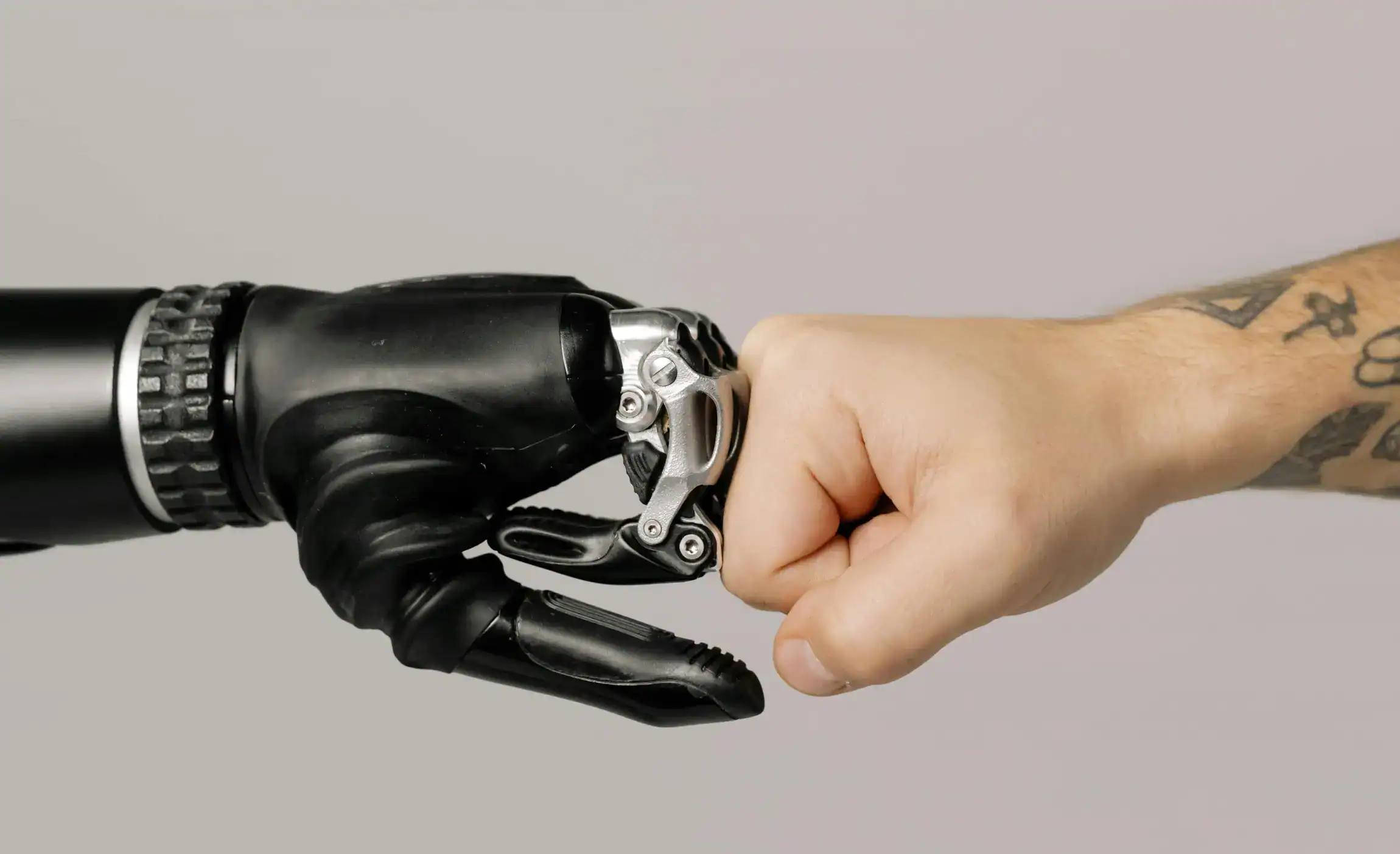
A human and a robot fist-bump. Symbolising the combined forces of humankind and cutting-edge technology.
|

Robotic Surgery Brings Hope to Rural Cancer Patients

Photo by Cottonbros Studio

Toggle Switch
Select Reading Level

Gastric, or stomach, cancer remains one of the most challenging cancers in the world, affecting over one million people globally each year. Frequently diagnosed late, the prognosis can be poor.  Particularly in rural or low-income regions, where access to timely and specialised treatment is limited. 

This lack of access isn’t just inconvenient.It can be deadly.

The Promise of Remote Robotic Surgery

In recent years experts have had increasing confidence that robots operating remotely could provide the answer to this problem.

Imagine this: a patient in a remote village faces a medical emergency requiring specialist surgery. Instead of enduring an exhausting, expensive journey to a faraway hospital, the operation is performed by a leading surgeon located in another city, or even on the other side of the world. All thanks to advanced robotics and ultra-fast data transmission.

This idea isn’t new but only recently have we had the technology to make it happen.
If you’d like to learn all about the history, and future of remote robotic surgeries check out our other blog post here.

Learn how 5G technology is revolutionising the healthcare field here 

China’s Breakthrough in Remote Cancer Surgery

groundbreaking new study from China has explored the possibility of using telerobotics to fight stomach cancer.

Surgeons successfully performed two complex gastric cancer surgeries using a robotic system powered by ultra-fast 5G technology, with one patient located over 1700km away from the surgical team.

This blog dives into the significance of this milestone and what it means for the future of global healthcare.

The Global Burden of Gastric Cancer

To understand why this matters, we first need to grasp the scope of the problem.

  • Over 1 million new cases of gastric cancer occur worldwide each year.
  • Gastric cancer is often diagnosed at an advanced stage due to a lack of early symptoms.
  • Later diagnosis = tougher treatment and a lower chance of survival.

This problem is worse in rural and lower-income areas where stomach cancer is more common as well as Eastern Europe and East Asia

There are various reasons for this: 

  • Dietary differences play a role. A diet rich in pickled, smoked or salted foods contributes to stomach cancer. 
  • H. Pylori burden is a contributing factor. H.Pylori is a bacterium that is known to cause stomach cancer. Some parts of the world have seen a reduction in H. Pylori through refrigeration and food safety practices, but it remains a leading contributor to stomach cancer in lower-income and rural areas. 
  • Unfortunately, people living in these lower-income or rural areas also often lack adequate access to medical facilities. This means they are more likely to be diagnosed later, which will negatively affect the outcome. Sadly, it has been shown that people with stomach cancer living in rural areas have a higher chance of dying from their disease than those living in urban areas.
  • These areas also often lack the specialist facilities needed to treat patients with stomach cancer. This can lead to delays in treatment delays which could reduce survival chances or force patients to forgo treatment entirely. Alternatively, patients can face extremely costly and problematic travel to treatment. 

This is a particular problem as treatments can often be time-critical. Researchers have found that the optimal time after chemotherapy for gastric cancer surgery is 4-6 weeks. If a patient faces a longer wait due to access to a specialist surgical team, it could impact their chance of survival. In fact, one study published in the Nature journal found that a delay in treatment was one of the most important factors influencing a patient’s chances . 

Could 5G Robotic Surgery Offer a Solution?

Mingze Zhang and colleagues wanted to analyse whether combining cutting-edge surgical robots with the data handling of the 5G network could help patients with stomach cancer.  

Two Surgeries, Two Successes. 

  1. A 58-year-old woman was 70km from the surgeons when her stage 2 stomach cancer was operated on. 
  2. A 57-year-old man with stage 3 stomach cancer underwent surgery some 1700km distance from the surgeons. 

How it worked

In both cases, the surgical team used a robotic system that allowed them to send surgical commands through the master console, which were then transmitted via the 5G network to the slave console in the patient’s hospital. Here, they were converted into actual movements by the robotic arm. 

Have a look at the type of surgical robot the team used here:

The 5G network also allowed the surgeons console to receive and display real-time 3.D images from the surgery. This helped the surgical team have a better view of the surgery and made the procedure both safer and more accurate

They were also able to receive information from other monitoring devices in the surgery as well as the anaesthesia machine. This allowed the surgeon to comprehensively monitor the patient’s vital signs and look out for any worrying signs during the surgery. Bringing all that data together meant the team could jump on any issues right away, just like they would in a regular, in-person surgery. Making the surgery both safe and effective.

If you want to delve further into the history and future of remote robotic surgeries, check out this blog next.

Prepared for the Unexpected

Thankfully, there were no surprises during the surgery but the teams had backup plans in place just in case.  

  • One problem could be if the wireless system suddenly crashed. While we’ve all experienced frustrating internet outages at home, during surgery the stakes are much higher. The 5G network company offered high-priority wireless transmission, with dedicated personnel there to problem solve in real-time should they be needed.
  • A backup dedicated line was also set up in case something went wrong with the main connection. Whether that was a drop in signal, delays in sending or receiving data, or even a cyber attack designed to overwhelm the system and block communication. Since surgeries rely on split-second timing, even a small disruption could cause serious problems, so having a reliable backup was essential.
  • Another concern is that surgery can be very unpredictable. What if the surgeons discovered something which required them to change the surgery to one the robots couldn’t handle? Or there was an emergency during the surgery. For this eventuality, two senior surgeons were present at the patient’s bedside. Although they were not needed this time, their presence was important to ensure the patient’s safety. 
A surgoeon stand in his scrubs under bright surgical lights holding a notebook. He illustrated the need for human presense even during remote robotic surgeries

Photo by Jabeer Alhassan

In the end, none of the contingency plans were needed and the surgeries in both cases were a complete success. The 5G network achieved a lag of just 99ms in the long-distance surgery and 45ms in the short-distance surgery- practically instantaneous! Both patients recovered well after their surgeries.

The experiences of these two patients show us that 5G can be used successfully for stomach cancer surgeries. However, it is important to remember this study looked at just two surgeries. More surgeries will need to be carried out across a wider range of conditions, including patients with different medical histories, in hospitals with varying levels of infrastructure, and at greater distances, to fully understand how reliable and effective this approach can be.

A Glimpse of What’s Possible

The successful use of 5G-powered robotic surgery for gastric cancer in China is more than a technical achievement, it’s a glimpse into a future where geography no longer defines healthcare access. For patients in rural or underserved areas, this breakthrough represents real hope: faster diagnoses, fewer delays, and life-saving care from the world’s top specialists, without ever leaving their hometown.

But while this case study shows what can be done, turning it into what is routinely done will require more than just innovation. Questions of cost, infrastructure, and equitable implementation still loom large. Even so, this moment marks a promising step forward, a sign that with the right tools and the will to act, we can begin to close the healthcare gap for good.

If you’ve enjoyed reading about telerobotic surgical interventions, you’ll love our blog all about microrobots being used to treat lung diseases.

A gloved hand holds a globe. It symbolises how innovations like remote robotic surgery aim to bring high-quality healthcare to the entire world.

Photo by Shvetsa

Here are some ideas to spark a fascinating discussion:

  • Should healthcare systems prioritize investing in robotic surgery for rural areas over building new local hospitals? Why or why not?
  • What ethical and legal challenges might arise with remote robotic surgeries across borders?
  • After the success of these two surgeries in China can we expect similar results in countries with weaker infrastructure?
  • Do you think this kind of innovation could reduce global health inequality or deepen the digital divide?

Big Family Question:

What would you choose: travelling for hours to see your doctor in person or having remote robotic surgery?

In what situations could you imagine yourself feeling OK about having remote robotc surgery? What would you want to ask your doctors first?

Looking for more family-friendly discussion prompts? Explore our child-focused version of this blog here.

Curious but cautious?

Love diving into science — but not always sure what to believe? Grab our free guide:
“5 Ways to Spot Fake Science News”
It’s full of quick, practical tips to help you tell real breakthroughs from misleading headlines.

Robot-assisted surgeries are already helping patients fight cancer remotely. Want to stay on top of the breakthroughs changing lives? Opt in to the Trailblazing Science newsletter for expert insights straight to your inbox.

Keep Exploring

Into medical breakthroughs? Try these blog posts next:

Let’s Talk About It

And now we’d love to hear your thoughts. How close would you want your surgeon to be? In the same room, the same hospital, the same country? Let us know below.

Related Posts

Leave a Reply

Your email address will not be published. Required fields are marked *