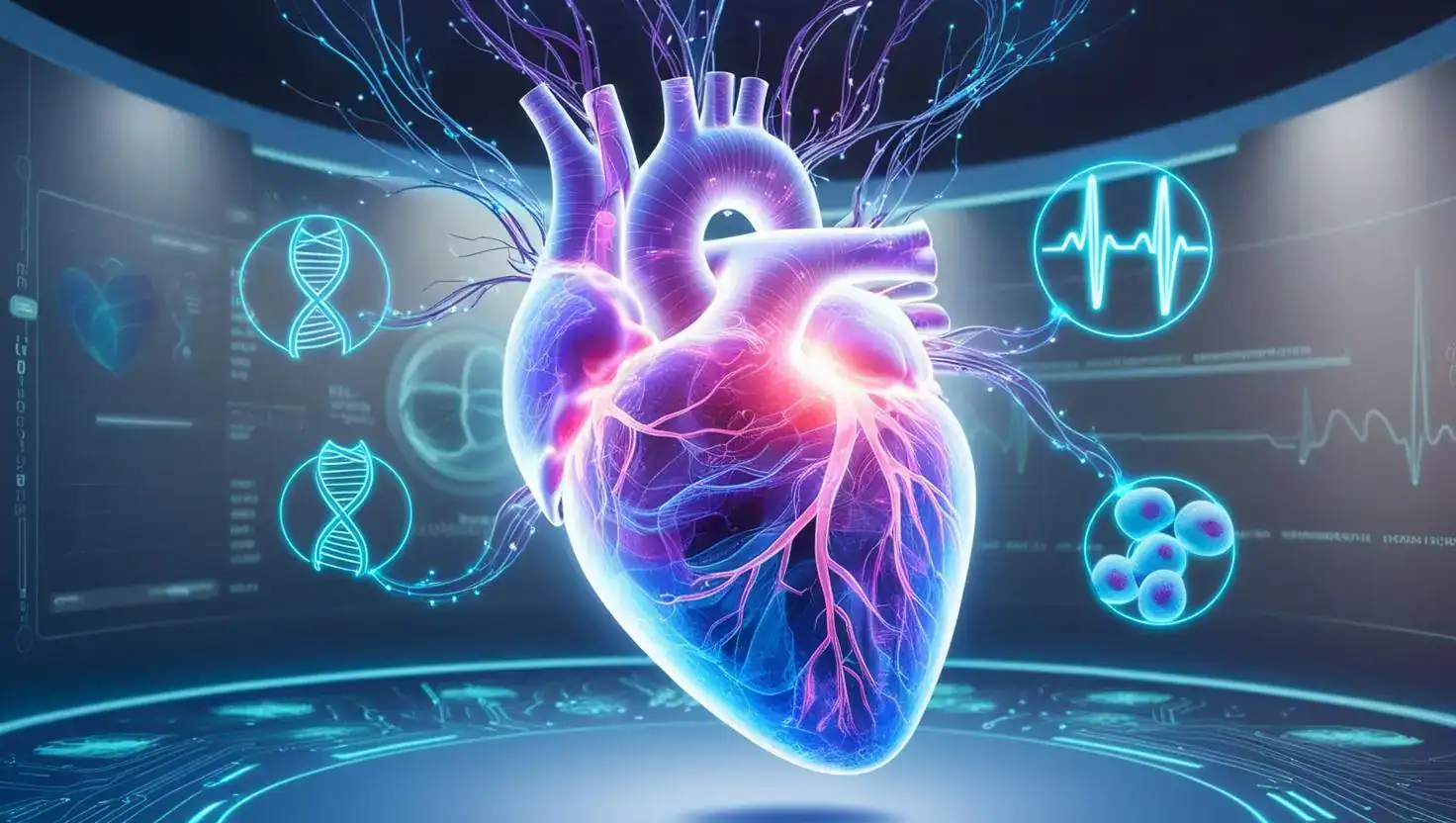
A glowing human heart appears suspended infront of holographic medical symbols like an ECG readout and a DNA structure. A futuristic image depicting the future of medicine.
|

10 surprising ways AI could help us live longer, healthier lives.

Toggle Switch
Select Reading Level

What is AI?

Imagine if your computer could think, learn, and even help save lives! Imagine a world where a machine could spot a hidden illness before a doctor can. That’s what AI is bringing to the world of health!

If you’ve ever played Minecraft, asked Alexa a question, or used your face to unlock your iPad, you’ve already used AI! But what exactly is it?

Traditional computers follow strict rules and can’t learn or solve problems on their own. They also struggle with complex things like understanding human language.

AI changes that! Like our brains help us think and solve problems, AI acts as a “brain” for computers, allowing them to learn from experience, like Alexa remembering your favourite song. 

Want to know more? Watch the video below!

USING AI TO SUPERCHARGE OUR HEALTH

AI is being used in many exciting ways around the world. From self-driving cars to AI-generated art. But did you know it’s also changing the way doctors take care of us? Let’s explore 10 amazing ways AI is helping doctors keep us healthy.

Giving doctors a better picture

Have you ever had an x-ray at the hospital? Machines like x-rays and MRIs help doctors spot problems like broken bones or serious conditions. But there aren’t enough doctors to look at all the images, so patients sometimes wait too long for help.

The images can also be tricky and messy, making it hard for doctors to find what they’re looking for, like a super difficult “Where’s Wally?”

That’s where AI comes in. AI is great at spotting patterns quickly, helping doctors analyze these images in seconds and even catch things they might miss. AI could even help save a life by finding something doctors didn’t see!

A patient lies on their back about to enter a big medical scanner. A nurse stands next to them.

Photo by MART PRODUCTION

Faster Life-Saving Decisions

AI can help doctors figure out if someone is having a stroke, a type of brain emergency, in just a few minutes. Strokes are very serious because every second counts. If doctors can’t figure out what’s happening fast, the person might get really hurt. But AI can use its super spotting ability to look at pictures of the brain and figure out exactly what type of stroke it is, instantly. This means doctors can give life-saving treatment super fast, before it’s too late. 

AI as our bodyguard- keeping us safe

A female doctor holds x-ray image of a human skull up towards the camera. She is looking through it to the camera.

Photo by Cottonbro Studios

Machines like X-rays and CT scans use a bit of radiation to capture pictures of our bodies. Radiation is a type of invisible energy that can travel through space and objects. While usually safe, too much radiation can be harmful, so doctors must be careful.

Normally, doctors must use a certain amount of radiation for clear images.  AI can help sharpen even pictures taken with less radiation, like turning a blurry photo into a crisp one. AI helps doctors take clearer pictures with less radiation, making scans safer for patients.

Stopping Alzheimer’s Early: A New Hope

Now, let’s talk about something a little tricky. Have you ever heard of Alzheimer’s? It’s a disease where the brain stops working properly over time, and it can make people forget things, like names, places, and even who they are. The thing about Alzheimer’s is that it’s hard to catch early, but AI is changing that.

AI scans brain images to find tiny changes in brain cells that doctors can’t see with the naked eye, sometimes even before someone starts forgetting things. Early detection means doctors can try to slow it down and give people more time to enjoy life.

One size does not fit all

Imagine if everyone in your class had to wear the same shoes! It wouldn’t work, right? We’re all different, and that includes how we get sick and how treatments work for us. Ever noticed how some people in your family get a worse cold than others? That’s because our bodies react differently, often due to our genes, the instructions that shape how we work.

Doctors have tons of information about our unique genes, but struggle to sort through it all. That’s where AI comes in! Think of it like a super-speedy librarian, scanning millions of pages to find exactly what’s needed. AI helps doctors spot patterns in our health, so they can find the best treatment for each person, helping us get better, faster!

A twisty DNA shape made of lots of tiny blue and white balls. It looks very detailed, like it would be really tricky to pick out just one of the little balls

Image by Brano on Unsplash

Finding New Medicine Faster

Creating new medicine is like trying to find the perfect key to open a lock. Scientists have to test tons of different keys, which can take years. But AI makes this process way faster. For example, AI can help scientists find the right medicine by testing millions of different ideas in just a few days. So instead of waiting years, we could have new medicines sooner to help people feel better, quicker. 

Finding a new medicine is just the first step. The next tricky part is getting it safely to the right spot in the body. Check out our blog to see how tiny microrobots can carry medicine right to where lung diseases hide!

A pile of pills in different shapes and sizes fills the screen.

Image by Mirjiam Zillis on Unsplash

Fighting back against Bacteria 

There’s also a big problem with bacteria. Antibiotics fight bad bacteria, which make us sick. But some bacteria are changing over time to overpower them, making even simple cuts or infections dangerous. Finding new antibiotics has been tough. But AI can help!. Scientists used AI to go through 100 million different chemicals to find a potential new medicine. Think about this: if you had 100 million marbles, you could fill several swimming pools! So it’s kind of like sorting through that huge pile of marbles to find a particular one. Scientists used this method to find a drug called Halicin. They think it can be used to fight super tough bacteria which no other medicines can. 

A collection of various pills and capsules are arranged into a question mark. It represents the quest to find which chemical could be the next big antibiotic

AI can tell how you are feeling

What if your watch could tell when you were feeling down and remind you to talk to someone who cares? AI is learning to notice small signs when someone feels sad, helping them get the support they need! AI-powered tools on your phone or smartwatch can track your health by watching small clues in your eyes, voice, and heartbeat. 

A young man sit on a bench his elbows on his knees and his hand wrapped around his bent head. He looks sad and in need of help.

Photo by Inzmam Khan

AI can spot changes when people feel sad, anxious, or stressed. For example, if someone’s voice sounds slower or their face shows fewer expressions, AI might notice and send an alert. A smart early warning system that’s helping doctors and therapists step in before things get worse.

AI your health buddy

A woman sit on a massage table with her head cocked to one side while a physiotherapist kneels behind her and places her hand on the patients sides.

Photo by Yan Krukow

Scientists in Scotland developed a new app they called “Kirsty”. Kirsty acts as a virtual doctor for people with back pain. When someone hurts their back, they often need special exercises, but there aren’t enough physiotherapists (someone who helps people with injuries or pain), so waiting for help can take weeks or months.

Kirsty can ask questions to understand the problem and suggest exercises. The app can also watch movements using phone cameras or sensors to make sure exercises are done correctly, adjusting advice if needed. If the pain doesn’t improve, Kirsty can refer users to a real physiotherapist for further help, This means people get faster care and feel better sooner, without waiting in pain!

Helping People Everywhere. 

Not everyone lives near a doctor, and that can make getting treatment hard. Some illnesses that should be easy to treat can make life much worse when care is far away.

That’s why scientists are using AI to make healthcare fairer. They want to help people get medical care no matter where they live. And guess what? A company you probably know-Google, is leading the way!

An old indian woman looks out of a window. The discolouration of her eyes suggests she is blind or partially sighted. She looks peaceful but a little sad.

Photo by Resizedjan Canty on Unsplash

Google’s AI has learned spot tiny signs in people’s eyes that they might lose their eyesight in the future. This gives doctors a chance to step in early and stop people from going blind! 

This amazing AI is already helping people in India and Thailand and could help millions more around the world!

Helping people get better no matter where they live is super important. Check out this blog next to see how doctors use special technology to do surgery from far away!

AI is Changing the Future of Medicine

AI is like a brilliant detective, a super-fast scientist, and a life-saving assistant all in one. It helps doctors see inside our bodies, detect diseases early, discover new medicines, and even bring healthcare right into our homes.

And the best part? This is just the beginning. As AI keeps learning, the future of medicine will become even more exciting. Maybe one day, AI will help cure diseases we’ve never been able to beat before!

What part of AI in medicine do you think is the coolest? Let’s talk about it!

Here’s some ideas to spark a fascinating family discussion.

  • Imagine a robot that can tell when you’re sad or worried. Would you like that? Why or why not?
  • What do you think would be the hardest part about trusting a computer to help with your health?
  • If you could ask an AI any question about your health or life, what would it be?
  • How do you think AI could help people who don’t have doctors nearby?

Big Family Question:

If you could design your own health robot or app, what would it do to help you and your family?

Science is awesome. So is asking questions.

Learn how to spot real discoveries from made-up ones with our easy 4-step checklist.
It’s fun, printable and free! Grab it below.

NEVER MISS A DISCOVERY- AI is changing the way we stay healthy, pretty amazing, right? Join our newsletter and keep exploring the awesome ways tech is helping doctors and patients.

Keep Exploring

Want to see more about how cool technology helps doctors save lives?

Robot Surgeons in Action — Find out how doctors can do surgery even when they’re far away!

Microrobots in the Lungs — Meet tiny robots that crawl inside your body to fight sickness!

Let’s Talk About It

Which AI healthcare invention did you think was the coolest? Tell us why in the comments below!

Related Posts

Leave a Reply

Your email address will not be published. Required fields are marked *