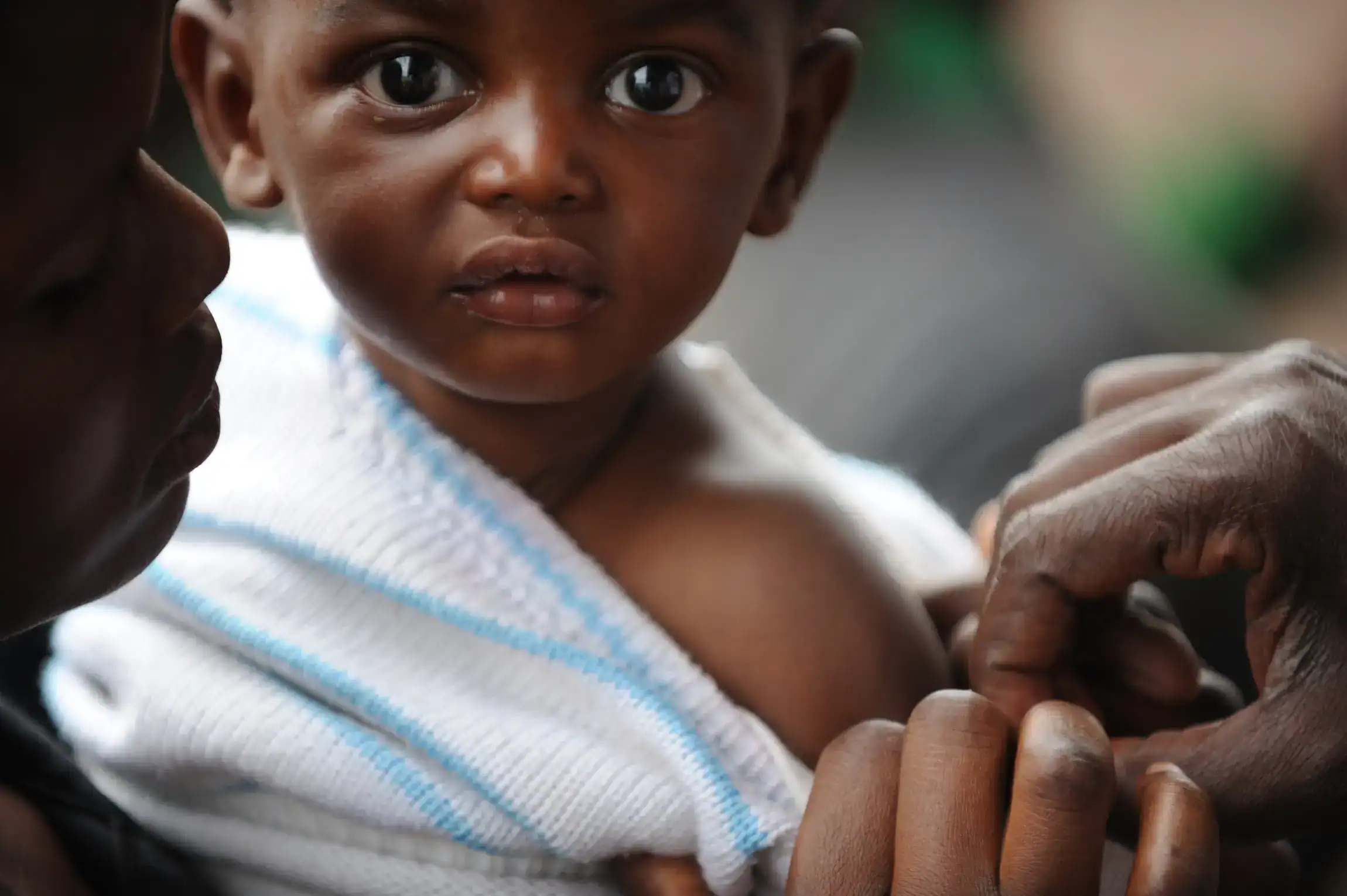
A small child in Rwanda receives a vaccination

The Hidden Illnesses You’ve Never Heard Of

Image by Julien Harneis., CC BY-SA 2.0 https://creativecommons.org/licenses/by-sa/2.0, via Wikimedia Commons

Toggle Switch
Select Reading Level

Imagine getting ready for school, but not being able to go.
Your backpack is packed, your friends are waiting — but you’re too tired and sick from a disease called snail fever.

Diseases like this don’t just make people feel unwell; they also stop millions of children around the world from going to school, playing, and learning.

These illnesses are called “neglected” diseases because they don’t get as much attention as others. But that doesn’t mean they’re small problems. In fact, they affect over a billion people worldwide, including millions of children just like you.

A map of the world showing the numner of people needing treatment for NTDs across the world in 2020. Cases are clearly clustered in Sub-Saharan Africa, South America and parts of Asia.

MDWiki(from Our World In Data), CC BY 4.0 https://creativecommons.org/licenses/by/4.0, via Wikimedia Commons

As you can see in this map, Neglected Tropical Diseases are mainly in certain parts of the world.

In this blog, we’re going to tackle some of the biggest and most important questions about Neglected Tropical Diseases. Read on to find out more!

What does a “Neglected Disease” really mean?

Some diseases are called Neglected Tropical Diseases, or NTDs for short. This is a group of 21 different diseases that mainly affect people in poorer countries.

They are called “neglected” because they don’t get as much attention as diseases that affect people in richer countries. Fewer scientists are working on new treatments, the news doesn’t talk about them as much, and the people in charge aren’t as worried about them.

But this doesn’t mean they aren’t a big problem. In fact, 1 in 5 people on Earth suffers from a neglected tropical disease! 

Can we really carry on ignoring so many of our global neighbours?

Which diseases are we talking about?

The 21 Neglected Tropical Diseases (NTDs) are all very different. They cause different problems, spread in different ways, and affect different groups of people. But they all have one thing in common: far more needs to be done to help the people who get them. Here’s a look at some of them:

One NTD we’ve already written about on the blog is African Sleeping Sickness. Scientists have discovered a new medicine that could save the lives of people suffering from a particularly tough type of this disease. Check out the blog here next!

Other NTDs include:

  • Trachoma – What might start as just an itchy or red eye can eventually cause blindness in children and adults.
  • Schistosomiasis (snail fever) – Tiny freshwater worms can damage the body so much that people feel very tired and may not be able to work or go to school.
  • Leishmaniasis – Painful sores on the skin and infections inside the body can make life very hard.
  • Chagas disease – Many people with Chagas don’t know they are infected, but over time it can slowly damage the heart and affect their lives.
A list of all 21 NTDs along with assosaited words like 'neglected' 'Urgency' amd 'breakthrough' The first letters of each word spell out SAVE COMMUNITIES STOP NTD'S TODAY

Here’s all 21 NTDs, can you see what they spell?

As you can see, these diseases certainly don’t deserve to be ignored… which brings us to our next question!

Why are these diseases ignored?

We are more likely to read stories in the newspaper about diseases that affect people in richer countries. The leaders of these countries spend a lot of time thinking about ways to stop people in their own countries from getting sick, and scientists work hard to find new treatments for them.

But neglected tropical diseases get far less attention. One of the biggest reasons is that the people who get NTDs are often poor. They can’t always afford medicines, and the countries they live in often can’t give them out for free. This means companies aren’t always interested in creating new medicines, because they can’t make money from them.

Also, leaders in richer countries aren’t as worried about these diseases, because they don’t affect people in their own countries. That’s one reason why we don’t see stories about NTDs in the news as much.

Which brings us to our next question…

Should we worry about NTDs if they only affect people far away?

The first and most important answer is: it’s not fair that some people stay sick just because of where they live. NTDs mostly affect the poorest and most vulnerable, and being sick makes it even harder for them to go to school, work, or improve their lives. It can become a never-ending cycle of sickness and poverty.

By paying attention to these diseases instead of ignoring them, we are helping to make the world a fairer place, where everyone who gets sick is treated as worth our time and care. And wouldn’t it be amazing if we all lived in a world like that? 

It’s also important to remember that these diseases can spread to new places. With climate change, some areas are getting hotter and wetter, while others are drier. This can help the insects that carry some NTDs find new homes, so helping people far away can also help protect everyone.

Are we making any progress?

There’s no doubt- NTDs are a tough problem to solve. But there is reason for hope. We have recently celebrated a few huge successes. 

Trachoma is a germ that can make people go blind if it isn’t treated. But there’s good news! Doctors and health workers around the world have been fighting it with something called the SAFE plan:

  • Surgery to fix damaged eyes
  • Antibiotics (a kind of medicine) to kill the germs
  • Face washing to stay clean
  • Environment improvements like clean water and toilets

Since 2002, 17 countries have won the fight against trachoma as a big health problem.

Today, far fewer people are getting sick with another disease called African Sleeping Sickness than ever before. And scientists have even found a new medicine that could save lives! Want to know how they did it? Check out our blog here.

Guinea worm disease tells another remarkable story!  It’s caused by a tiny worm that sneaks into people’s bodies when they drink dirty water.

40 years ago, about 3.5 million people were catching this disease every year. Let’s think about that… that’s like 70 big football stadiums full of people getting sick each year! 

Today, thanks to communities working together — using clean water, simple filters, watching for new cases, and helping sick people safely — Guinea worm disease is almost gone. In 2023, just 13 people around the world got it. That’s an amazing difference!

Children in Chad can be seen sat barefoot on the floor. A girl has a pipe hung from a chain around her neck. A boy has a long thin pipe in this mouth

CDC Global, CC BY 2.0 https://creativecommons.org/licenses/by/2.0, via Wikimedia Commons

These children in Chad are holding special straw-like filters. The filters clean dirty water and help stop Guinea worm disease from spreading

These success s tories show us that if we all work together we CAN and WILL win the battle against NTDs. But it’s going to take a lot of teamwork to get there. 

So what’s happening with NTDs today?

We’ve made wonderful progress against many NTDs, but sadly, this progress is now in danger. Some countries, like America, have recently stopped giving money to help fight NTDs, and other funds have also dried up.

Developing new medicines, teaching people how to avoid getting sick, and helping people when they do get sick all cost money. Without enough money, more people could catch these diseases, and their lives could be turned upside down.

But there’s still hope! People around the world are working hard to keep helping communities, invent new ways to fight these diseases, and make the world a fairer, healthier place for everyone.

What can children do about it?

By reading this blog and learning all about NTDs, you’ve already taken the first step toward creating a fairer world, one where people don’t get sick or die from diseases we could have stopped, just because of where they live.

The more people who know about NTDs, the less they get ignored. So share what you’ve learned! Tell your friends, your teacher, or anyone who will listen. You could even write a letter to your local newspaper or a politician, asking them to pay more attention to these diseases.

Or you could even organise something for World Neglected Tropical Diseases Day on January 30th. Every little action helps!

The progress so far shows that “neglected” does not mean “too hard to beat.” Some of the world’s most brilliant scientists and experts are studying these diseases, finding new medicines, better ways to stop people getting sick, and ways to help communities stay healthy. With all their work, the future looks exciting, and we can hope that one day, these diseases will be gone for good.

Here’s some ideas to spark a fascinating discussion.

  • Do you think it’s fair that where someone is born can change how much help they get for their health?
  • If you could design a poster to teach people how to stop getting sick, what picture would you draw?
  • If you had to choose one superpower to fight diseases, would you pick: x-ray vision to see germs, super speed to deliver medicine, or magical clean water?
  • What do you think would happen if kids in every school around the world learned about NTDs?

Big Family Question:

If you were in charge of spending money on diseases, how would you decide which ones should get the most?

Science is awesome. So is asking questions.

Learn how to spot real discoveries from made-up ones with our easy 4-step checklist.
It’s fun, printable and free! Grab yours below.

NEVER MISS A DISCOVERY- Loved learning about neglected diseases? Make sure you opt in to our newsletter and keep exploring the amazing world of medicine and science!

Keep Exploring

Want to see more incredible science, hoping to improve the lives of people around the world? Check out:

Let’s Talk About It

And now- over to you. Do you have any other questions about Neglected Tropical Diseases? Let us know in the comment box below!

Related Posts

Leave a Reply

Your email address will not be published. Required fields are marked *