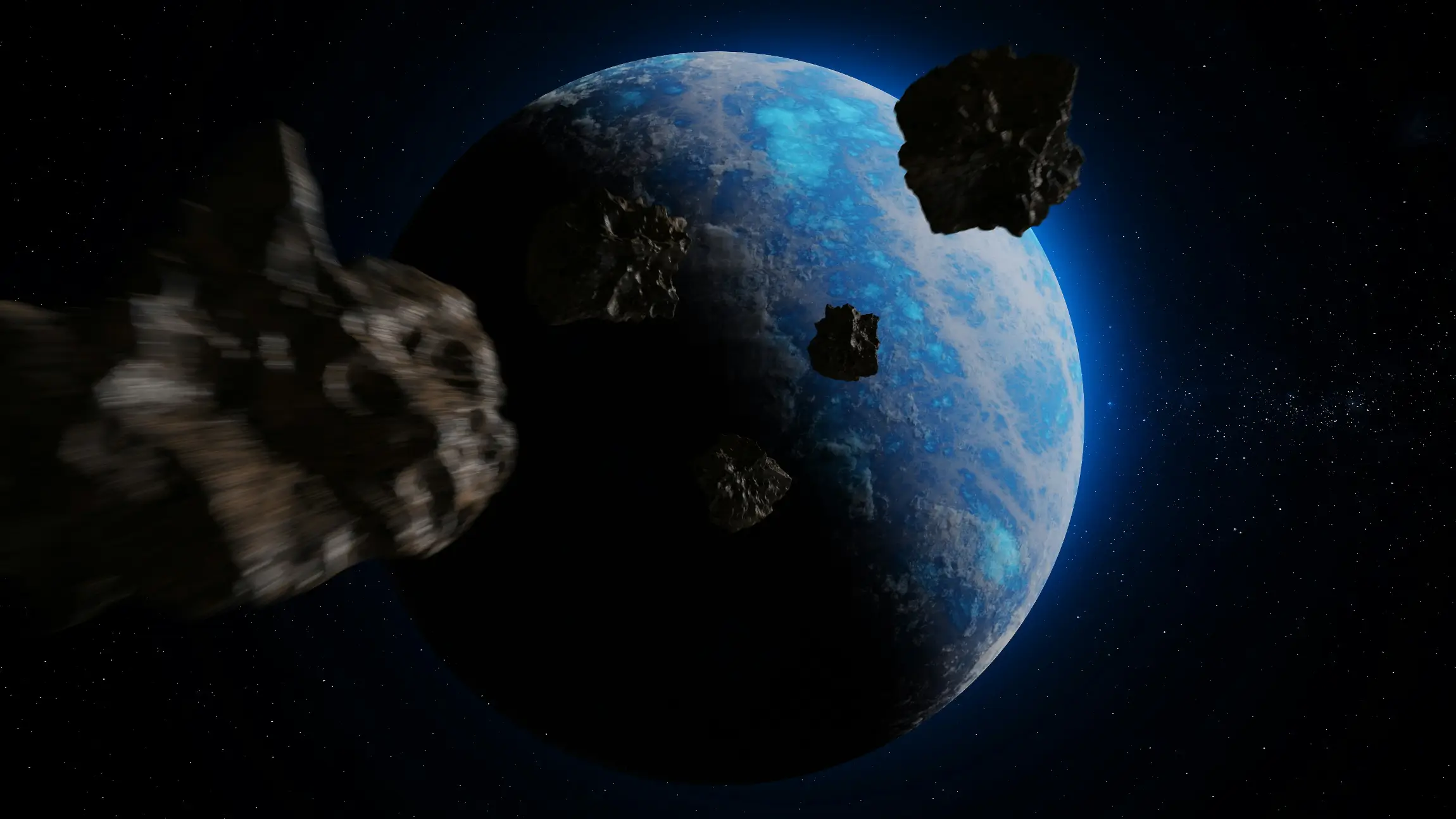
Several asteroids can be seen floating near am blue alian planet

Asteroid PANIC?! Not So Fast… Let’s Check the Science

Photo by Javier Miranda on Unsplash

Toggle Switch
Select Reading Level

3 city-killing asteroids could strike Earth within weeks — generating a million times more energy than Hiroshima atomic bomb

A recent headline in the Mainstream News

Three huge asteroids that could smash into Earth within WEEKS?! Woah! Sounds pretty bad. But before you run off to build an asteroid bunker in your garden, let’s check if it’s really true.

Here at Trailblazing Science, we’re on a mission to bust bad science and find out what’s really going on.

But first- if you aren’t sure what an asteroid is, check out this video

What’s the Story?

A few newspapers said that scientists discovered three dangerous asteroids hiding near Venus (the planet closer to the Sun than Earth). The articles claimed these asteroids might:

  • Hit Earth without warning
  • Be more powerful than a million bombs
  • Be coming in just a few weeks

Pretty scary stuff. But is any of it true?

Let’s find out.

An asteroid fills most of the screen. Its surface is bumpy and uneven. IN the disnace is a sun rising above the surface of the Earth

What Did the Scientists Actually Say?

The real science paper was written by a team in Brazil. Here’s what they actually did:

They created computer pictures of asteroids that travel near Venus.
Then they fast-forwarded the computer through 36,000 years of space adventures.
They checked if those asteroids could ever come near Earth.
They tested how easy (or hard) it would be to spot them with telescopes

Here’s what they found:

  • Yes, Venus might be hiding some asteroids we haven’t seen yet
  • And yes, it’s hard to spot some of them from Earth (because of the bright Sun!)
  • Yes some of them technically could come close to  Earth at some point
  • But NO, they didn’t say any would hit Earth ‘within weeks’ 
  • AND they didn’t even say how likely it was they would come close to Earth at all. 

Venus is beautiful- but it DOES hide asteroids…just not ones that will hit Earth anytime soon,

 So Where Did “Within Weeks” Come From?

Here’s the twist:

The paper says that Earth telescopes can’t see those asteroids for a few weeks at a time because of the Sun’s glare.

But the newspaper turned that into “they’ll hit Earth within weeks!”
That’s a BIG leap and not what the scientists meant.

It’s about when we can’t see them, not when they’re going to crash into us.

Science to the Rescue

It’s also good to know that even though some websites make this “blind spot” sound super scary, it might not be as bad as it seems. Scientists are already working on two amazing new telescopes that will help us spot way more asteroids, especially the sneaky ones!

The first telescope is being built in Chile, and it’s so powerful it could find millions of new asteroids in just the first few months! The second is a special space telescope called the NEO Surveyor. Since it floats out in space, it doesn’t have to look through Earth’s atmosphere (which can blur things), so it gets a super clear view. That means it’s even better at spotting asteroids zooming through space.

So while we’re not catching every asteroid just yet, these new tools will make a huge difference—and they’re coming soon!

How to tell Fact from Fiction

It’s also important to know that this study is something called a pre-print. That means the scientists have written it and shared it, but other scientists haven’t checked it yet. In science, it’s really important that other experts read a study, ask questions, and make sure everything makes sense. That process is called peer review.

Right now, we don’t know what other scientists think about this study. It might turn out to be really good, or someone might spot a mistake. That’s why it’s smart to always check: has the study been peer-reviewed, or is it still waiting for a thumbs-up from the science community?

Watch Out for These Scary Words

The article used some pretty dramatic language:

  • “Killer space rocks”
  • “Wreaking havoc”
  • “City-destroying asteroids”
  • “The researchers warned…”

These are classic fear-bait words. They make you panic so you’ll click on the story, even if the science doesn’t back it up.

In fact in Trailblazing Science’s free science news checklist– Is it Real or Rubbish, that’s Step 4:

Look out for stories designed to make you feel strong emotions like being scared.

If you want to check out the other steps grab your FREE copy below. 

A fake news checklist. Red flags stand next to the catagories-Fear Bait, Lost in Translation, Big Talk no data, Headline hijinks and Peer-review problems.

Our Final Verdict?

This story gets a Clickbait Score of 85%.
That means it’s mostly fiction, not real science.

The study is real
But the headline twisted the facts
And made it sound way scarier than it is

Next time you see a wild headline, ask your family: “Do you think that’s really true?” or “How could we check if that’s right?”

A Test tube with the words 'clickbait concentration written above it. And '85%' written below it. On the side are the measurement marks- low, moderate, high and full bait Mode. A red liquid fills to the 85% mark. The rest is a blue liquid. It represents an approximation of how much of the article was fake news vs accurate science

Science is awesome. So is asking questions.

Learn how to spot real discoveries from made-up ones with our easy 4-step checklist.
It’s fun, printable — and free! Grab yours below.

Sometimes it can be hard to know which science stories to trust. If you want to get only the most reliable and also most exciting science stories delivered straight to your inbox make sure you sign up for the Trailblazing newsletter below.

Want to Read REAL Space Science?

If you love space but want the actual facts (without the drama), check out our latest incredible space science blogs below

Moon Bricks made from bacteria and space dust!

How do you water a plant in space?

Smart Fabrics: Amazing Inventions Changing Healthcare, Space and Robots

And don’t forget to grab your free guide:
“5 Quick Ways to Spot Fake Science News”
So you can become a science myth-buster too!

Related Posts

Leave a Reply

Your email address will not be published. Required fields are marked *