Chemicals lurking in playgrounds….really??
Recently a rather scary headline hit several newspapers. Making claims like:
Toxic chemicals found on swings and slides
That sounds really scary. But is it true? As we know at Trailblaizing Science HQ you can’t always believe everything you read. So lets take a deep dive into the science and sort fact from fiction.
Photo by Lachezara Parvanova on Unsplash
Where did this headline come from?
The chemicals mentioned in these headlines are part of a group called pesticides. Pesticides are used on food crops to protect them from insects, weeds, and other pests that can damage or destroy crops.
But some people are worried that some of these chemicals could be bad for our health.
PAN UK is a charity that tries to reduce how much pesticides are used.
They recently looked at 13 playgrounds and checked to see if there was a type of pesticide called glyphosate. They found the chemical in 8 of the playgrounds.
But this is far from the end of the stroy, lets keep going.
Photo by Gildásio Filho on Unsplash
What do we know about these results?
It’s important to know that these results did not come from a peer-reviewed scientific paper. But what does peer-reviewed mean?
Peer review is when other scientists carefully check a study before it is published. They look to see if the experiments were done properly and whether the scientists’ conclusions are backed up by good evidence.
The work by PAN UK has not been through this process yet. That doesn’t mean it’s all wrong, it just means we don’t know for sure.
Peer review would normally ask questions like:
- Did they check enough playgrounds?
- Were the playgrounds they checked similar to most other playgrounds?
- Was there enough glyphosate found to actually cause harm?
And many more careful checks.
So what DO scientists say?
There have been lots of scientific studies looking at whether glyphosate (a weedkiller) can make people ill. Scientists have paid special attention to checking if it could cause cancer.
When researchers look at all the studies together, there is no good evidence showing that the small amounts of glyphosate people might come across in everyday life cause cancer.
A few studies suggest that very high amounts of glyphosate might be linked to illness. But these levels are much higher than what most people would normally be exposed to.
Photo by Shubhendu Mohanty on Unsplash
Finding Something Doesn’t Automatically Mean It’s Dangerous
Modern science equipment can find tiny traces of chemicals almost anywhere. But just because something can be detected does not mean it can harm us.
So far, scientists have not found evidence that the small amounts of glyphosate sometimes detected in places like playgrounds make children sick.
Clickbait Check
Let’s put it all together.
What’s true:
- Small amounts of pesticide was found on playgrounds
- The effect pesticides can have on our health is still being studies
What was NOT found:
- That there was enough pesticides on the playground equipment to make us ill
- That playgrounds are bad for us becuase of the chemicals
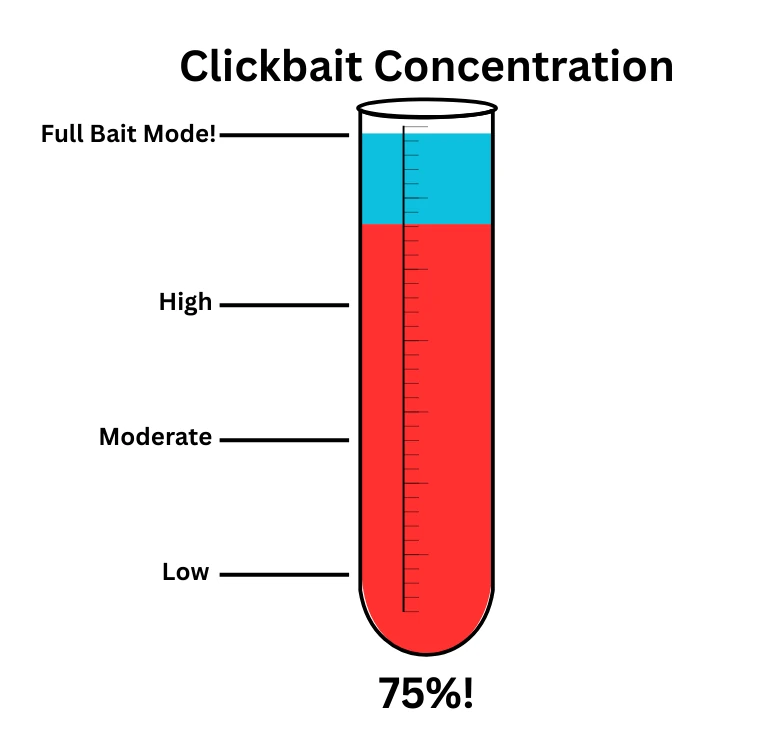
Clickbait Score: 70%
It wasn’t completely made up, but the article did make the situation sound scarier than the evidence really shows. Some headlines use dramatic phrases like “scientists warn” to grab attention. But now we know the claims were based on work that had not yet been peer reviewed.
Sensationalism Red Flags
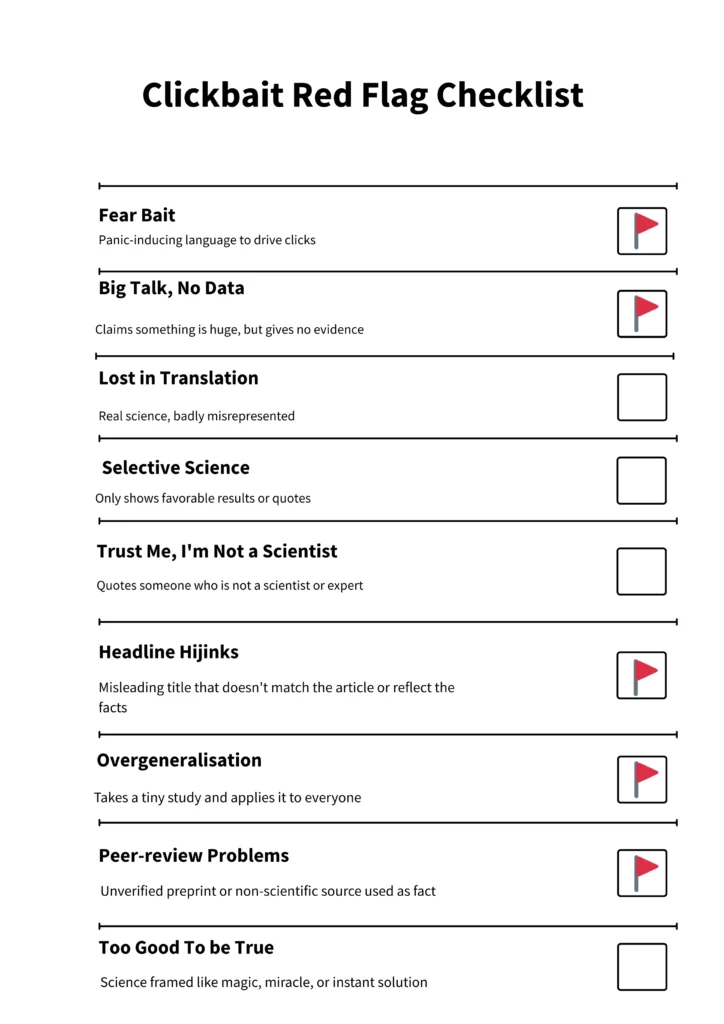
Remember, if you see any science headline that seems to be trying to scare you, chances are they aren’t telling the full story!
It can be tricky to tell the difference between a genuinely important science discovery and a headline written mainly to make people click. A great first step is to pause and think:
“Is there more to this story?”
We know it’s hard to tell what’s true online. That’s why we made a free guide just for kids and families called “Is It Real or Rubbish? A Science News Checklist for Curious Families.” It’ll help you ask the right questions next time you see a wild science headline. Grab yours below.
Want to Read REAL Medicine Stories?
How about Sugar, Sound and Science: Tiny Bubbles That Heal?
Or Shrinking Down to See a Hidden World: The Story of CL
Or perhaps From Fly Bite to Recovery: A Story About African Sleeping Sickness